
Scope & objectives
What the project investigates, why it matters for Thessaly, and where its innovation lies.
Subject
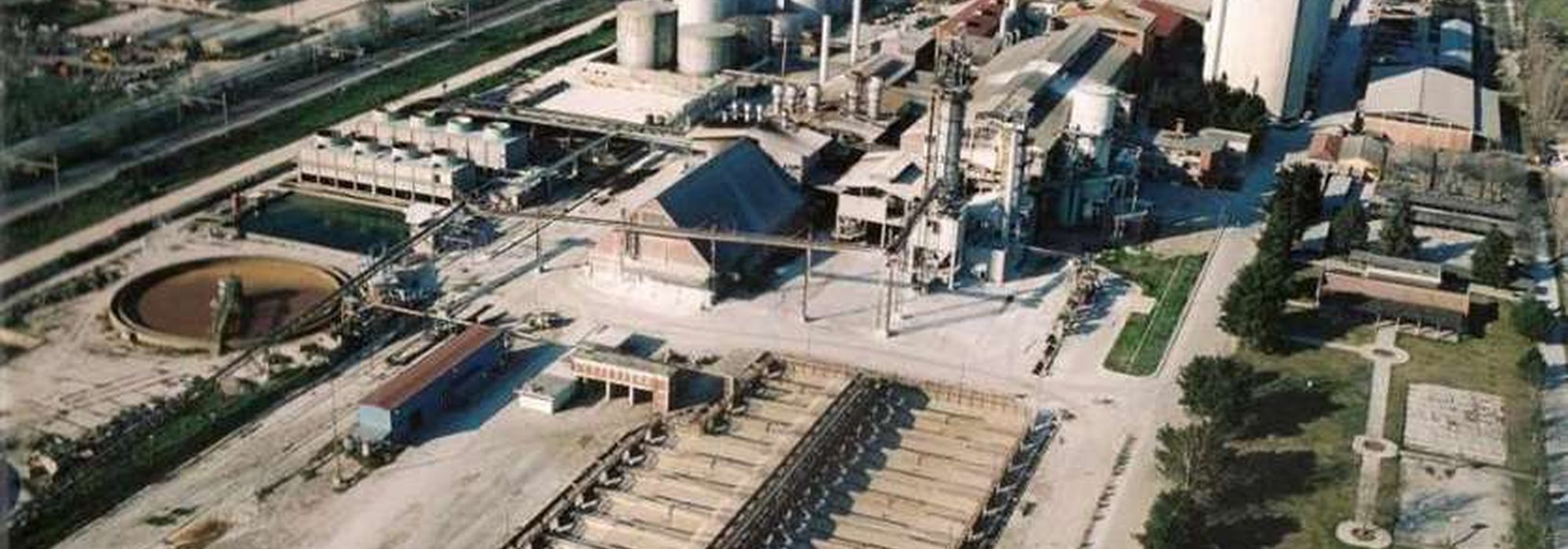
This proposal concerns applied research in the field of the supply chain of the Region of Thessaly, with reference to the potential establishment of an intermodal transport centre (rail, truck and ship) and a freight transhipment station in the city of Larissa, and specifically on the site of the old, disused sugar factory.
Transhipment and intermodal transport stations allow the use of multiple transport modes, generating a series of positive effects across a broad range of economic activity:
- a significant reduction in transport cost;
- increased efficiency of the regional and national supply chain;
- facilitation of international connections;
- development of the local economy;
- substantial environmental benefits.
The core aim is to investigate the feasibility of establishing an intermodal transport and transhipment centre in the city of Larissa, and specifically at the premises of the disused sugar factory.
The common resultant of six sub-objectives
Analysis of demand and freight traffic
Traffic flow and route analysis; examination of the available transport modes (rail, road, maritime) and their contribution to intermodality; freight movement forecasts on a daily, monthly and annual basis.
Location selection and siting strategy
Examination of the strategic position for access to the main networks; availability of land and area able to support future expansion; access to transport modes.
Participation of the agri-food sector
How the agri-food sector affects the core functionalities of the centre and what share of activity it is expected to represent.
Management strategy and business plan
How the centre will operate, the services offered, the expansion and adaptation plan, growth forecasts and the addition of new services where demand exists.
Economic analysis and viability
Estimation of the economic benefit the intermodal centre will deliver, based on forecast traffic and the services it will provide.
Legal and regulatory matters
Recording of the permits required and compliance with national and European standards for transport and safety.
Where the funding is directed
Research capacity
Funding of the researchers and scientists who will work intensively on each of the six sub-objectives.
Digital tools
Creation of digital tools for the analysis and review of traffic load and of individual sectors of the local supply chain.
Equipment & software
Purchase of the physical support equipment and of the application-development and simulation software required.
Dissemination
Dissemination of results and production of recommendations and good practices.
Rationale
The establishment of an intermodal transport centre in Larissa is closely tied to the needs of local businesses: it offers solutions that facilitate the movement of goods, reduce cost and improve supply chain efficiency.
Businesses in Larissa and across Thessaly gain easier access to domestic and international markets through a combination of transport modes — road, rail and potentially maritime. The ability to tranship cargo from trucks to rail vehicles, or the reverse, reduces total cost, improves transport speed and enables better inventory planning.
At the same time, temporary storage, logistics and distribution services create new business opportunities for both smaller and larger companies, while new businesses that depend on efficient supply chains may consider the area as a potential location.
Degree of innovation
Strategic position
Larissa sits at a pivotal point between Athens and Thessaloniki, serving both northern and southern Greece. Connection to different transport modes provides considerable flexibility to the national supply chain.
Digital freight flow management
Integration of modern technologies: IoT systems for cargo tracking, route optimisation software and warehouse management systems (WMS) for operational automation.
Strengthening the local economy
Attracting investment and creating jobs; SMEs gain cost-effective freight solutions and can compete with larger companies.
An innovation hub
The centre can act as a logistics innovation hub, attracting research projects and university collaborations, and networking with European transport hubs.
Flexibility through optimisation
Advanced optimisation models for organising freight flow reduce delays and improve delivery times, with infrastructure for rapid loading/unloading and special cargo.
Real-time visibility
A web application for real-time shipment tracking and management, giving users full visibility of inventory and transport.
Outreach and visibility
The project organises a plan for disseminating results and communication actions for their uptake beyond its lifetime. The plan describes how the project will cooperate and create synergies with comparable projects so that all benefit mutually from dissemination activity.
- Public events and information days.
- Press releases and interviews in the media.
- A project website and web platform with information, news and progress announcements.
- Social media activity (LinkedIn, Facebook, X) with updates, articles and video.
- Information leaflets and brochures on the objectives, benefits and effects of the centre.
- Site visits and guided tours of the intermodal centre.
- Informational videos, increasing the accessibility of information through audiovisual material.